Three field accounts published in 2026 give unusually concrete evidence about extreme-weather design: a hail event at Lubbock, a snow-stow case during Storm Fern and a typhoon exposure in Guam.
Most extreme-weather discussion is either laboratory testing or a datasheet claim. These cases record what happened to specific arrays under specific conditions.
They are still case reports, not controlled experiments, and that distinction shapes how we use them.
The engineering problem
Three different failure modes
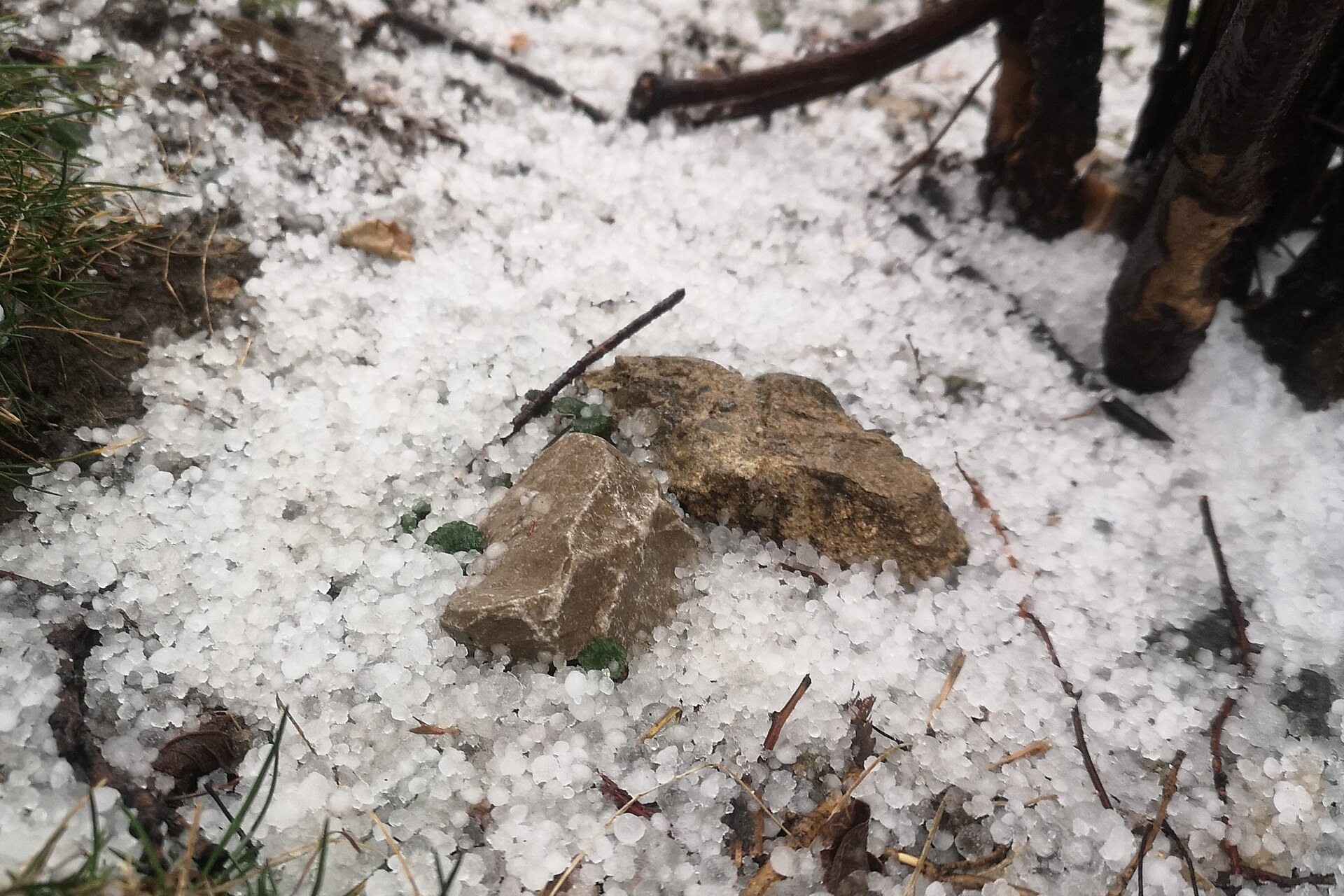
Hail threatens module glass, snow threatens availability and stow duration, and extreme wind threatens clamps, torque tubes and foundations. We tabulate event, hazard, stow angle and duration, reported damage, and the conclusion each case supports.
What changes in practice
Why the Lubbock figure is narrow
A reported module damage rate below 0.018 percent at an automated 60-degree hail stow applies to two sites and one event. It is a strong field data point, not a probability for all hailstorms.
How to cite these sources
The accounts appear in an insurance-sector report with chapters contributed by asset owners and vendors. They are first-party testimony, not independently reproduced experiments, so every number is checked against the report text rather than press summaries.
Data box
| Field | Value as reported |
|---|---|
| Lubbock | 60-degree hail stow, about 3 hours, under 0.018 percent module damage |
| Storm Fern | Snow stow restored generation up to 10 days earlier |
| Guam | Hardened clamp array survived 111 mph typhoon winds |
| Failure taxonomy | Glass, clamps, torque tube, foundation, control system |
All figures above are quoted with the unit and reference period used by the primary source. They are reproduced here for reference, not independently re-measured.
Limits of the evidence: verification note
Figures come from contributed chapters in an insurance-sector report. They are first-party accounts, not independent reproductions; we quote the report text directly and not media retellings.
What to watch next
Whether owners publish instrumented wind and stow logs alongside the damage counts.
Primary sources
- kWh Analytics Resilient Power Report 2026 (Clearway / Nextpower / Madison Energy / NRL chapters)
- kWh Analytics Solar Risk Assessment, May 2026
- VDE Americas hail risk guidance
Researched and written by the solarrack.wiki editorial desk. Every figure in this article carries a source and a verification note; where a claim could not be confirmed against a primary document, it is labelled as such. Corrections: [email protected]